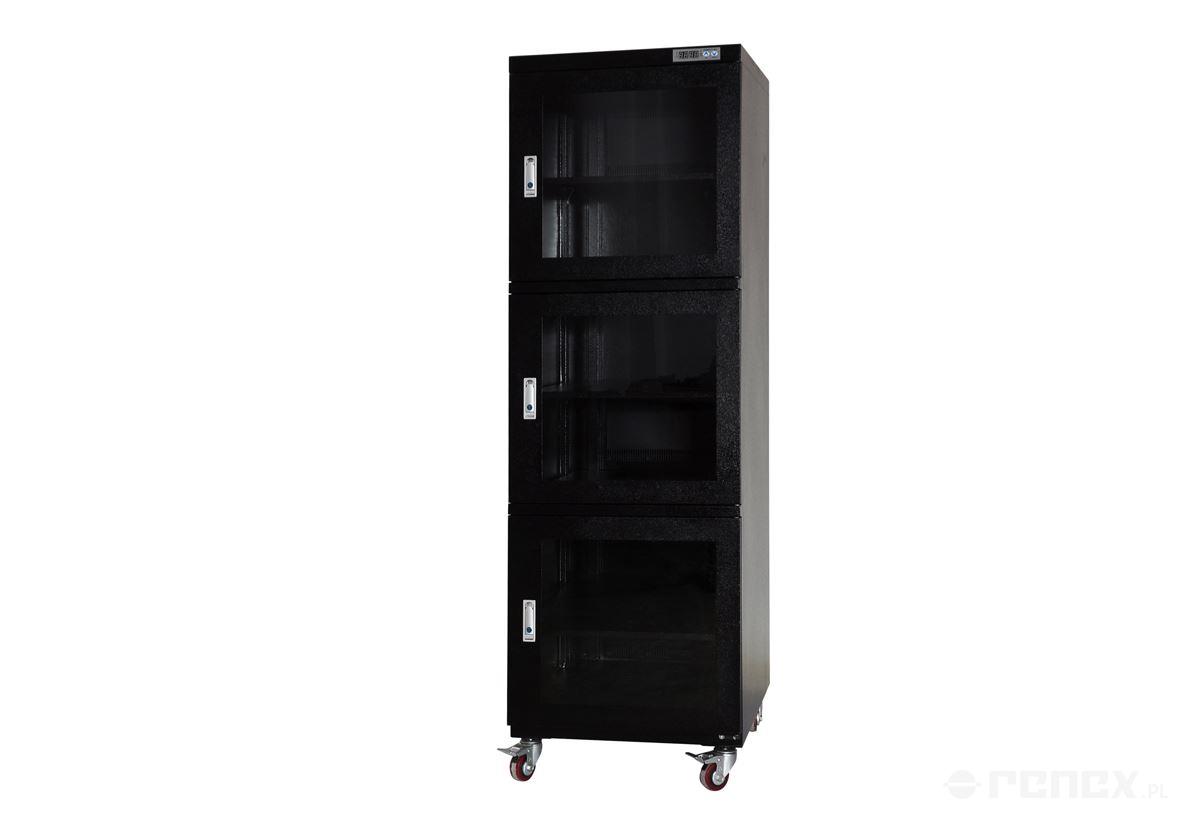
Dry cabinets for PCBs (Printed Circuit Boards) are specialized storage systems designed to remove and control moisture levels in PCBs and other electronic components. Printed circuit boards are highly sensitive to humidity, which can negatively affect performance, reliability, and long-term durability, and may even lead to electronic failure.
A PCB is the foundational element of most electronic devices, including televisions, smartphones, computers, and industrial equipment. It consists of an insulating substrate with conductive copper traces that create electrical connections between mounted electronic components. Maintaining proper environmental conditions during storage is critical to preserving board integrity and component performance.
Moisture exposure can lead to oxidation, delamination, soldering defects, and failures during reflow processes. For this reason, controlled humidity storage is essential, particularly for moisture-sensitive devices (MSDs).
Dry cabinets for PCB storage
PCB dry cabinets utilize various dehumidification technologies such as controlled heating, air circulation systems, or advanced desiccant-based drying modules. These methods effectively remove excess moisture from stored boards and electronic components, including capacitors, transistors, and integrated circuits.
Modern dry cabinets continuously monitor and regulate internal temperature and humidity levels to maintain optimal storage conditions. Many systems are equipped with digital hygrometers and temperature monitoring systems, ensuring precise environmental control and full process visibility.
Dry cabinets are particularly important in high-reliability electronics manufacturing sectors such as medical, aerospace, military, and automotive industries, where long-term stability and performance are critical. They are also widely used in research laboratories and prototype development environments to protect sensitive electronic assemblies.
In summary, dry cabinets for PCB storage are essential in electronics manufacturing, providing controlled humidity environments that protect sensitive components from moisture-related damage. They are commonly used in production facilities, warehouses, and laboratories where maintaining strict environmental conditions is necessary to ensure product quality and reliability.