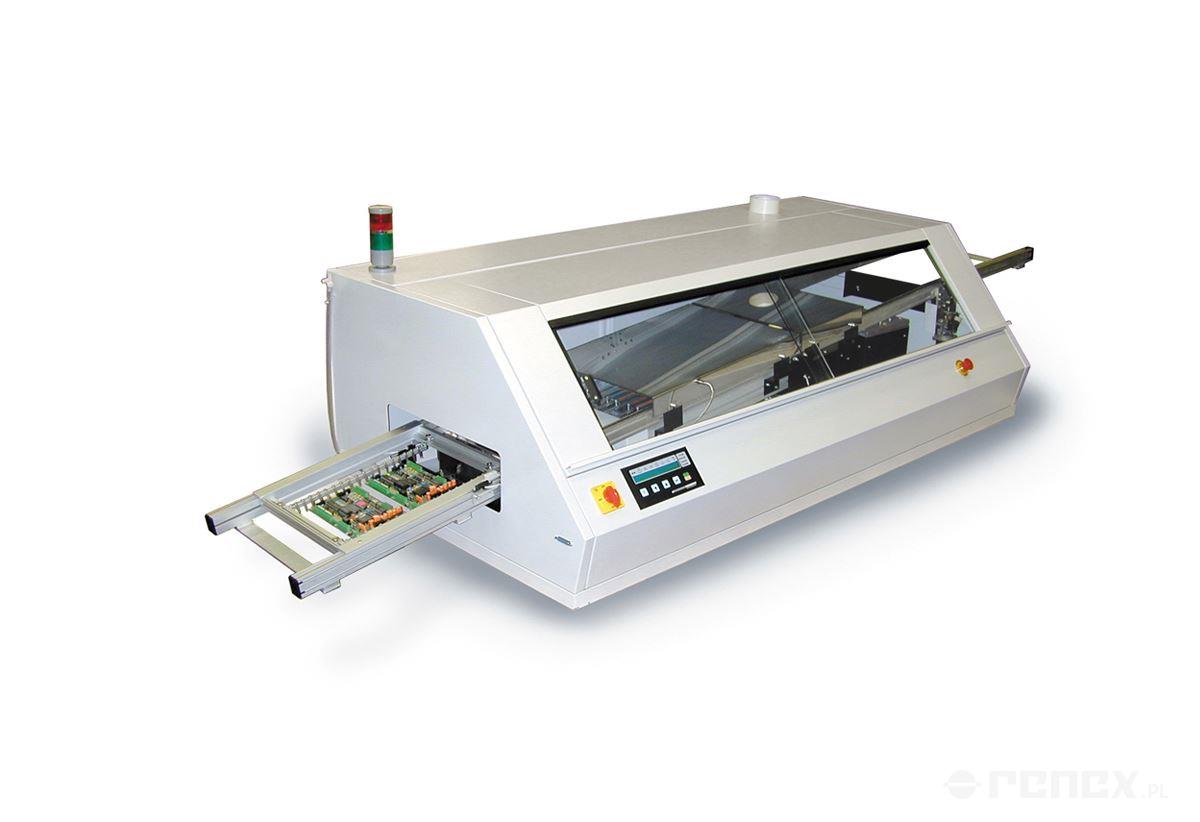
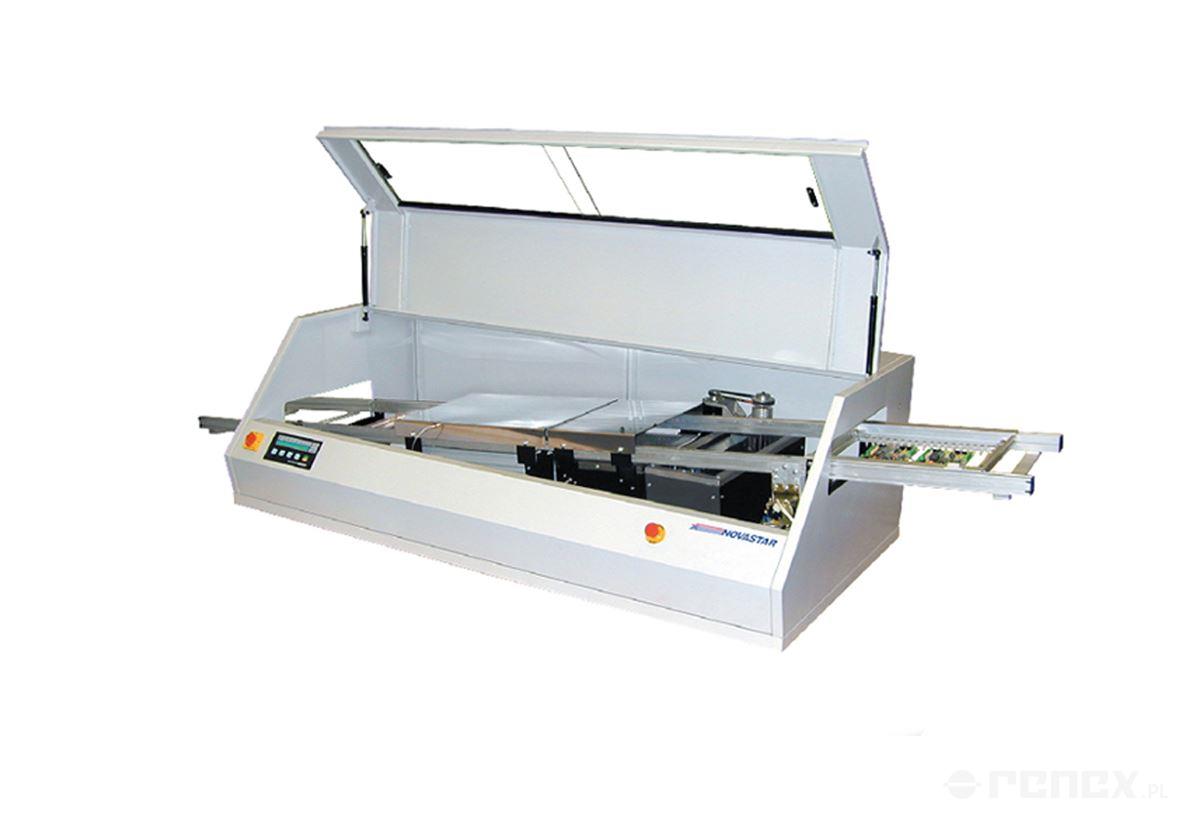
Wave soldering machines are industrial systems designed for efficient and reliable soldering of through-hole components (THT) and selected SMD assemblies. This technology is widely used in electronics manufacturing where high production throughput, repeatability, and durable solder joints are required.
In the wave soldering process, the PCB passes over a controlled wave of molten solder. The solder makes contact with exposed metal pads and component leads, creating strong and consistent solder joints in a single, continuous operation. Wave soldering systems are particularly effective for medium and high-volume production, ensuring stable process control and reduced manual intervention.
A typical wave soldering process consists of several stages:
Flux application - preparing the PCB surface to improve solder wetting and remove oxides.
Preheating - gradually increasing board temperature to activate flux and minimize thermal shock.
Solder wave contact - the PCB passes over molten solder, forming electrical and mechanical connections.
Cooling - controlled solidification of solder joints to ensure long-term reliability.
Modern wave soldering equipment offers precise temperature control, adjustable conveyor speed, programmable process parameters, and compatibility with both leaded and lead-free solder alloys. These features ensure high process stability and compliance with current industry standards.
Wave soldering machines are widely used in industries such as industrial electronics, automotive electronics, power electronics, telecommunications, and consumer electronics manufacturing. Their ability to handle large PCB panels and through-hole components makes them an essential part of many production lines.
Our portfolio includes reliable and high-performance wave soldering systems designed for professional electronics manufacturing. We also provide full technical support, implementation services, and operator training to ensure optimal production performance.