
Transportation systems
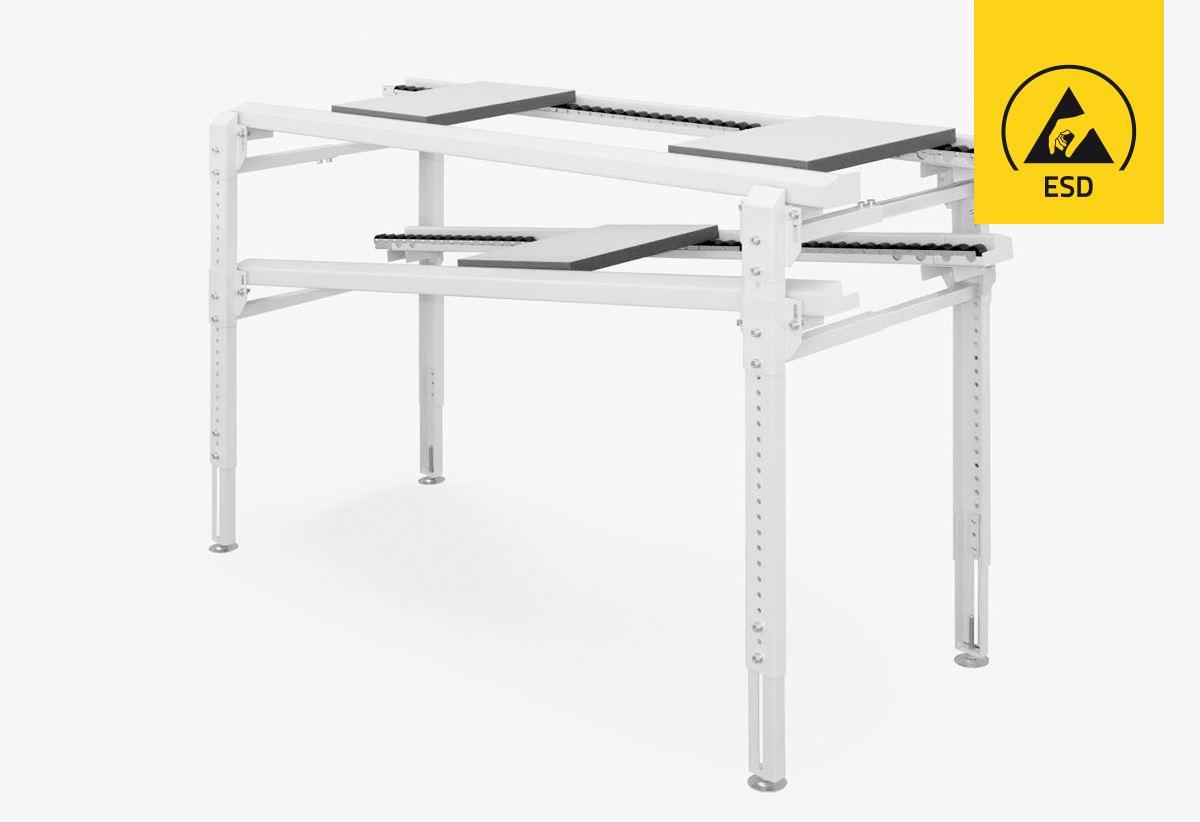
Conveyor systems for production lines
Production conveyor systems are designed to transport materials, components or finished products between different stages of the manufacturing process, or between machines and equipment within an industrial facility. These conveying solutions enable continuous material flow, supporting faster production, lower operating costs and improved process efficiency. Production conveyor systems are available in various formats, including belt conveyors, roller conveyors, pallet conveyors, pneumatic transport systems, warehouse automation systems and many others. Each conveyor system is designed to meet the specific requirements of the production process and the materials being handled.
For example, belt conveyors are a popular choice due to their flexibility and cost-effectiveness. Roller conveyors are well suited for transporting heavy and large items, while pallet conveyors are ideal for moving high volumes of materials or products. In automated manufacturing environments, production conveyor systems are often integrated with industrial robots and other equipment, enabling fully automated production processes. As a result, production conveyor systems support more efficient, faster and more precise manufacturing, which in turn improves business competitiveness and profitability. Conveyor systems for manufacturing offer many advantages that should be taken into account when designing and implementing this type of solution in an industrial plant. Here are some examples:
- Increased efficiency: Conveyor systems for manufacturing enable fast and efficient movement of materials and products between different production stages or machines, which improves the efficiency of the entire production process.
- Time optimisation: Conveyor systems make it possible to automate transport, reducing the time previously required for manual movement of items between production stations.
- Improved safety: Conveyor systems for manufacturing eliminate the need to move heavy items manually, which can lead to workplace injuries. Automated transport also improves product safety by reducing the risk of damage during handling.
- Cost reduction: By implementing conveyor systems, companies can reduce the number of employees required to move materials and products, leading to lower operating costs and improved profitability.
Conveyor systems on production lines are a key element of the manufacturing process, enabling the movement of products or materials between individual production stages. Below are some examples of conveyor systems used on production lines:
- Belt conveyors: These are belts made of rubber or plastic that are driven by motors, enabling products or materials to be transported from one production station to another.
- Roller conveyors: These systems use rollers to move products or materials along the line. The rollers are connected by a belt or chain driven by a motor.
- Pneumatic conveyors: These are pipeline-based systems that use compressed air to transport products or materials from one production station to another.
- Transfer robots: These are robots programmed to move products or materials along the production line. Transfer robots can be used for transporting materials or products with large dimensions.
Our production line conveyor systems are designed with safety in mind, eliminating the need for manual handling of heavy items and thereby minimising the risk of injury.