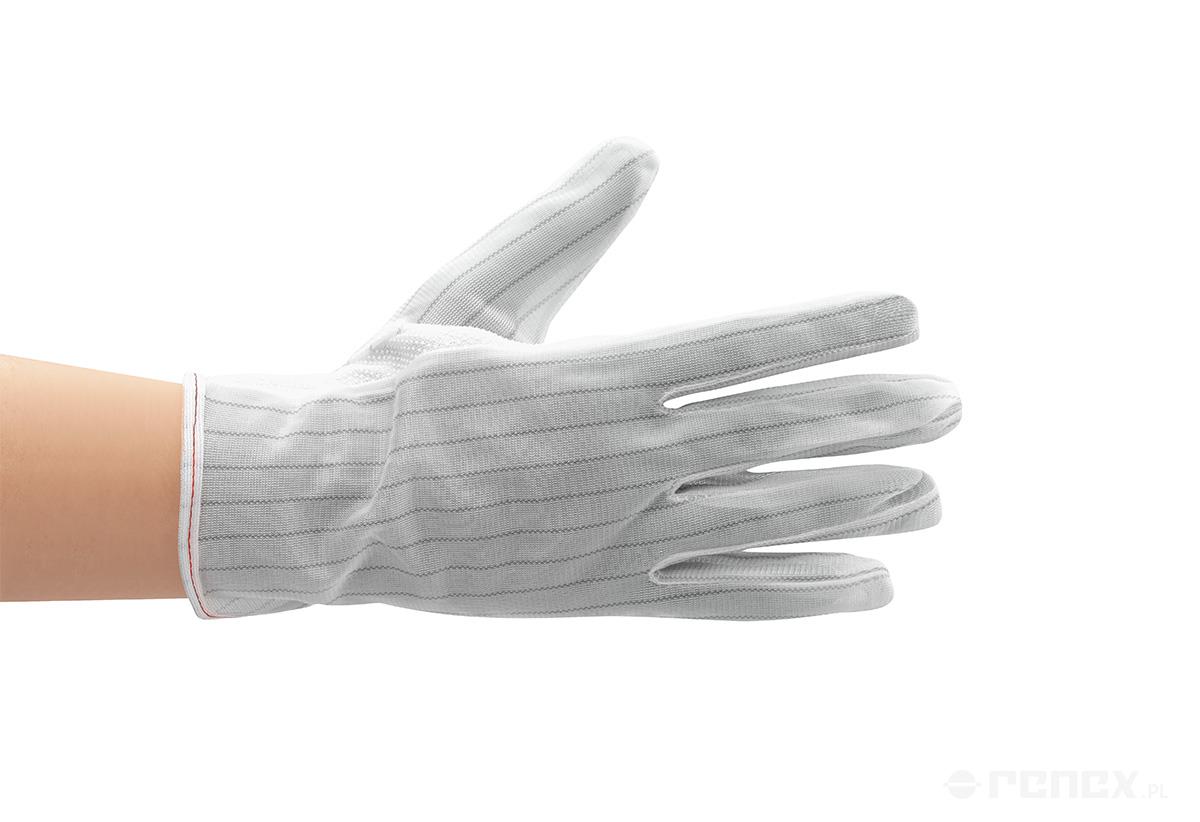
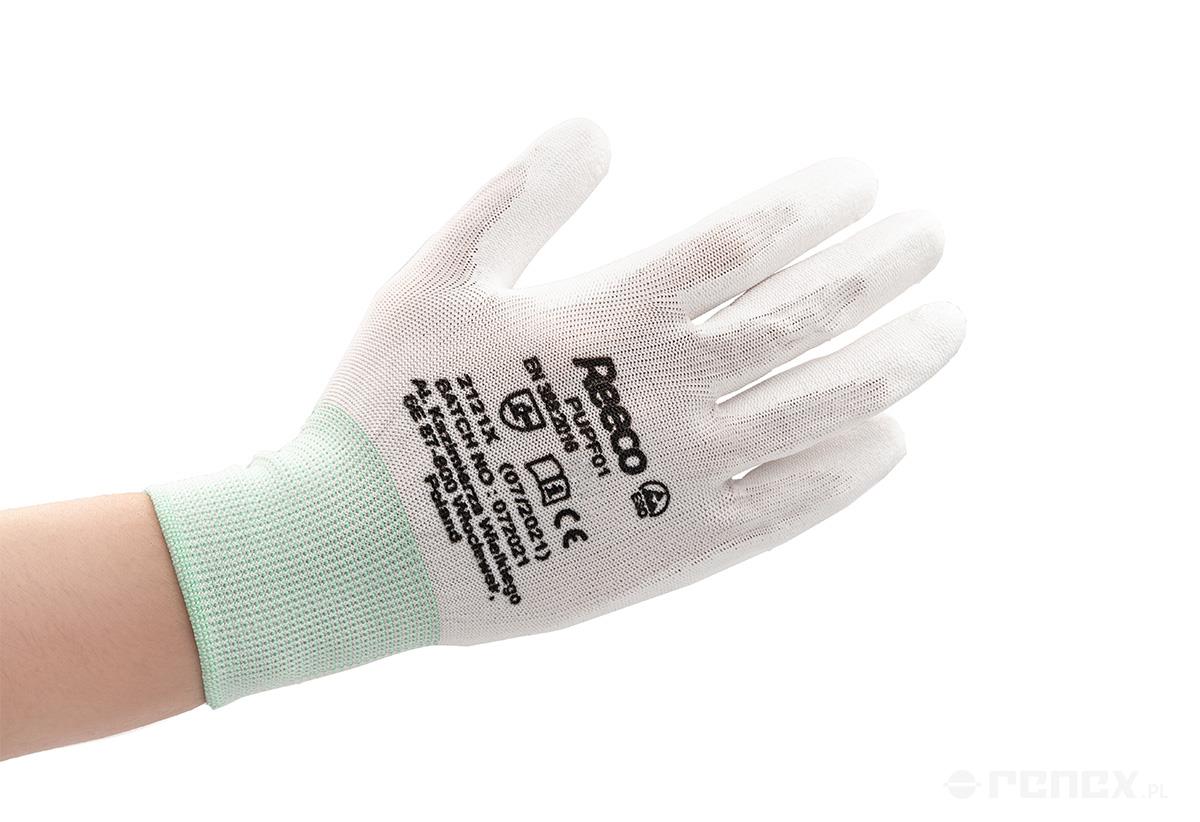
Have you ever touched another person’s skin and felt a spark or “shock” pass through your hand? This is what we call electrostatic discharge, or “ESD” for short, meaning the release of static energy that builds up in our bodies. The small electric impulse you feel during electrostatic discharge is in fact around 3,500 V of static energy being released. That is why it is recommended to wear ESD protective gloves when working with devices or components sensitive to electrostatic charges, such as PC components or during smartphone repair.
Antistatic gloves help protect electronic products and personnel against potential hazards related to static damage. These gloves are also referred to as ESD gloves and are ideal for use in cleanrooms (microelectronics) and in electronics manufacturing. Antistatic gloves are widely used in low-humidity environments and in areas with high sensitivity to particles. They are most commonly used during the handling and assembly of electronic devices, because static charges can damage sensitive electronic parts. REECO is a leading supplier and manufacturer of antistatic gloves in Poland. Explore our full range of antistatic gloves and other ESD protection solutions today.
How do antistatic gloves work?
The main purpose of antistatic gloves is to protect ESD-sensitive electronic components, such as printed circuit boards, which are vulnerable to damage caused by electrostatic discharge. ESD gloves should be either dissipative or conductive. They should dissipate electrostatic charges or conduct them away from the operator. To achieve this, these gloves contain a blend of soft synthetic fibres and conductive materials. As a result, they provide enhanced ESD protection by conducting current more effectively, which helps prevent the build-up of electrostatic charges.
Although antistatic gloves can reduce the risk of electrostatic discharge, they are not grounded in the same way as other antistatic products, such as ESD mats. For this reason, a grounding wrist strap should always be used as additional protection against electrostatic discharge.
REECO ESD gloves are cost-effective, durable, and manufactured to a high quality standard. They are specifically designed for handling sensitive films, electronic components, printed circuit boards, and precision tools. These gloves are widely used in optics, aerospace engineering, electronics, telecommunications, as well as in the petrochemical industry. In terms of durability, REECO gloves do not negatively affect the employee’s dexterity or manual precision, and their materials are designed to limit and reduce the build-up of electrostatic charges. Our antistatic gloves are completely dust-free and can be used both together with antistatic wrist straps and separately, as both solutions are effective when working with electronic boards. However, using them together is recommended, especially in cleanroom environments.
What are antistatic gloves made of?
Antistatic gloves are available in many different types and forms, all of which affect the final price and intended application. In terms of materials, they are typically made from:
Latex – this is the most affordable and most commonly used material for antistatic gloves. Its drawback is that it cannot be used by people with a latex allergy.
Vinyl – although it is a suitable option for employees or employers with latex allergies, it is not as puncture-resistant or as durable.
Nitrile – naturally antistatic, highly puncture-resistant, and durable, and because nitrile gloves are made from synthetic latex, they can be used by all employees regardless of latex allergies. Nitrile gloves are more expensive than vinyl or latex gloves.
Fabric – this material allows the gloves to be reused and recycled, which can translate into significant savings compared to disposable gloves.
It should be remembered that different glove materials may be unsafe to use with certain chemicals. For example, although nitrile gloves are durable and eliminate problems related to latex allergies, they are not suitable for use with aromatic or ketone solvents. Your work environment may require more than one type of glove to ensure maximum protection for both employees and products.
When should ESD gloves be used?
Gloves designed to protect against electrostatic discharge are ideal for all work related to electronics assembly where skin contact may cause problems, for example during handling of microelectronics, repair of PCs and laptops, or assembly processes in which electrostatic discharge may be a risk.
An electrostatic discharge sensitive device (ESDS) can be damaged after being touched, even if it is properly grounded. Increasing the contact resistance of the electrical path is one way to reduce and control the rate of discharge. An excellent way to achieve this is by wearing ESD antistatic protective gloves.
REECO antistatic gloves are among the best gloves to wear in many different situations, such as:
Building and assembling high-end PCs
Working with electronic products
Working in a PCB manufacturing facility
Mechanical and electrical workshops
Chemical industry
Repair or upgrading of smartphones and gadgets
Working with electrostatic-sensitive devices
Packaging and precision manufacturing
ESD protective gloves are highly recommended for anyone who regularly works with electronics.